
Trachea
Say it: TRAY-kee-uh · your windpipe
This sturdy tube carries air from your throat toward your lungs. Rings of cartilage help keep it open, like supports in a tunnel.
An air highway that stays open for every breath.
Understand the difference smoking makes.
Discover the truth about vaping.
Give your lungs a healthier tomorrow.
Small choices today.
A lifetime of better breathing.
Wondering how to quit, what vaping does, or how smoke affects people nearby? Ask in your own words, share a situation or follow up on an answer.
AI with health references and room for follow-up questions. Pip can make mistakes and cannot diagnose or prescribe.
Tap a part. Follow a breath. Try a little challenge.
Let’s see what’s happening inside you.
The diaphragm relaxes upward and the lungs spring back, moving air out.
Say it: TRAY-kee-uh · your windpipe
This sturdy tube carries air from your throat toward your lungs. Rings of cartilage help keep it open, like supports in a tunnel.
An air highway that stays open for every breath.
You’ve met all five parts. Now follow the air they help move.
Choose a stop to see what happens.
Air enters through your nose or mouth. Your nose helps warm, moisten and filter it before it continues down your windpipe.
Three tiny challenges. Match each job to the right member of your breathing team.
Take your time. Every try helps you learn.
You matched all three jobs. Air sacs exchange gases, the diaphragm powers breathing, and cilia help clean your airways.
Explore at your own pace. The motion is a teaching model, not a breathing test or exercise. Lung anatomy ↗ How breathing works ↗ Cilia and smoke ↗
Your lungs work for you with every breath.
Here’s how tobacco smoke can change that.
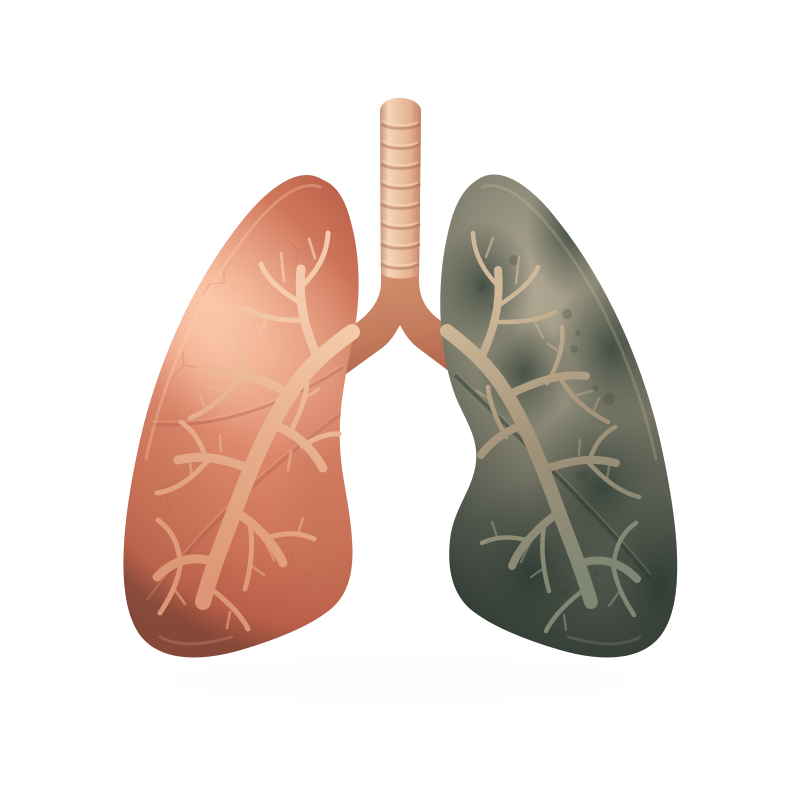
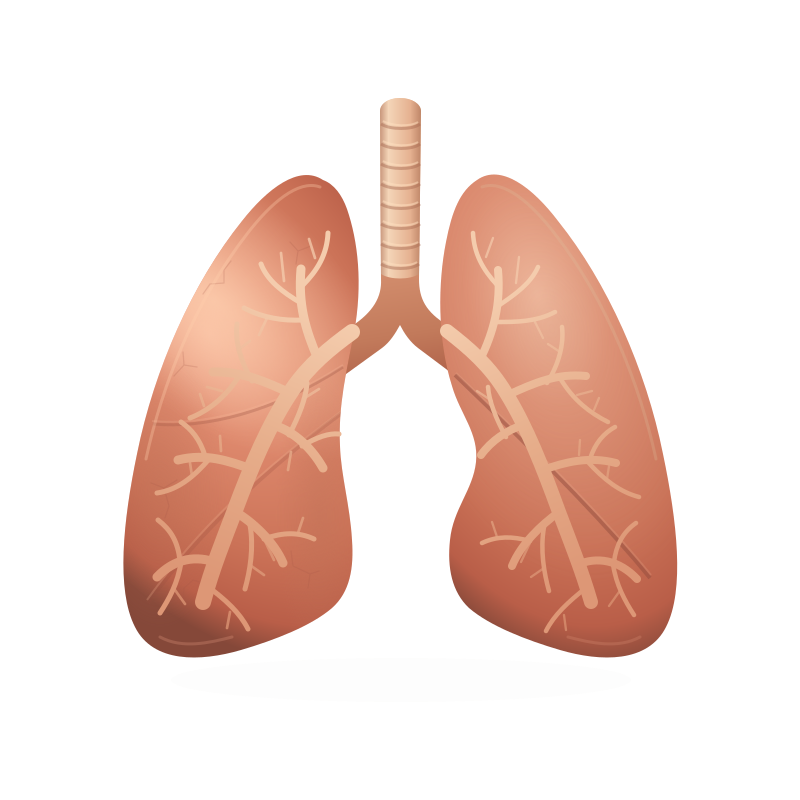
Healthy airways let air move freely. Tiny air sacs called alveoli transfer oxygen into the blood and remove carbon dioxide.
Smoke can inflame and narrow the airways. Over time, it can damage the air sacs, making oxygen exchange less efficient.
A simplified comparison, not a diagnosis. Never smoking does not guarantee healthy lungs; other exposures and conditions also matter. Sources 1, 2, 6 & 9 ↗
A different device doesn’t mean no risk.
Knowing what you inhale is a good place to start.
E-cigarettes heat a liquid into an aerosol. It can contain addictive nicotine, metals and other harmful substances. [3]
Most e-cigarettes contain nicotine. It is highly addictive and can harm the developing adolescent brain. [3]
Aerosol can carry tiny particles deep into the lungs. Vaping can cause coughing and irritation; its long-term health effects are still being studied. [3, 4]
Vaping generally exposes users to fewer harmful chemicals than smoking. Adults who smoke may reduce harm by switching completely, but using both is not an effective way to protect health. If you don’t smoke, don’t start vaping. [3, 4]
Curiosity, friends who vape, appealing flavors and marketing can make vaping feel normal. Some people use it to cope with stress, but nicotine dependence can add to that stress. Understanding the influence helps you make your own choice. [5]
You don’t have to do everything at once.
Start with one step that feels right for you.
Learn what smoking and vaping do. Question “safe” or “nicotine-free” claims and check trusted health sources.
Try “No thanks, I don’t smoke or vape.” Spend time with people who respect your choice.
Notice your triggers. Take a walk, drink water or message a friend when a craving or pressure shows up.
If you smoke or vape, talk to a healthcare professional or a trusted adult. A quit plan and support can help.
Practical steps based on CDC and Smokefree guidance. Sources 11 & 12 ↗
Choose a step to build your own prevention plan.
Quitting is a skill you can build.
Open each step and make a plan that fits you.
Think of something you want to protect or enjoy. Keep that reason close for the moments that feel difficult.
When you’re ready, consider a quit date within the next two weeks. Tell someone supportive. Clear away cigarettes, lighters and ashtrays before that day.
Already started? A date within the past year is welcome too. Dates up to one year ahead are allowed.
A trigger is a feeling, place or routine that brings on an urge to smoke. Select yours for a few ideas to try.
Choose a trigger to reveal a new little routine.
Ask a trusted person to check in. A doctor, pharmacist or local stop-smoking service can help you choose support. For adults who smoke, counseling together with suitable medication offers the best chance of quitting.
If you are under 18, pregnant or breastfeeding, speak with a healthcare professional before using quit-smoking medicines. If you vape, ask for help tailored to vaping.
CDC: proven quit support ↗ About quit medicines ↗Urges come and go. Try a glass of water, a short walk, music or a chat with a supportive person. Keep your hands busy and spend time in places where people do not smoke. Try another strategy if the first one does not help.
Celebrate small wins. If you smoke again, it does not erase your effort. Notice what led to it, adjust your plan and reconnect with support. You can restart without waiting for a perfect day.
NCI: getting back on track ↗Saving is off. Your selections last until this page is reloaded.
A general planning tool, not a treatment prescription. A healthcare professional can adapt support to your age, health and circumstances. CDC guidance ↗
Smoke from a burning cigarette and smoke breathed
out by someone else both become secondhand smoke.
There is no safe level of secondhand smoke exposure. Even brief exposure can harm the heart and blood vessels. Being near smoke does not mean you will definitely become ill, but avoiding exposure matters.
CDC: secondhand smoke and health ↗Secondhand smoke can cause heart disease, stroke and lung cancer in people who do not smoke.
It can cause asthma attacks, respiratory and ear infections in children, and sudden infant death syndrome (SIDS) in babies.
Smoke can move between rooms. An open window, fan or air purifier cannot remove the risk from smoking indoors.
Ask everyone, including visitors, to keep smoking out of the home. Another room or an open window does not protect the people inside. If smoke enters from a neighboring home, ask building management about smoke-free options.
Keep shared spaces free of vaping aerosol too: it is not harmless water vapor. CDC: protecting your home ↗ NCI: smoke exposure ↗ CDC: vaping aerosol ↗
You can offer information and encouragement.
The decision to quit belongs to them.
Choose a calm moment. Ask permission to talk about smoking and listen to what makes quitting feel difficult.
Ask if they would like a reliable fact or resource. Connect it to what matters to them. Avoid lectures, guilt and arguments.
A walk, a ride to an appointment or a check-in can help. Agree on the support they want and celebrate small wins.
You can ask for smoke-free shared spaces even if they are not ready to quit. If a conversation feels unsafe, step away and seek trusted support.
Choose a conversation starter. Adapt it to your own voice.
“I care about you. Would it be okay to talk about smoking? How do you feel about stopping? If you want help, I could look through a quit plan with you.”
If they say “not now,” leave the door open: “I’m here if you ever want support.”
NHS: helping someone quit ↗Teach one helpful thing. Offer one kind action. You do not have to have every answer.
Make a plan together ↑Four questions. A little more clarity.
See what you’ve learned about your lungs.
Quitting helps at any age. Coughing and shortness of breath often decrease over the following months, and risks of several diseases fall over time. Lung damage from COPD, including emphysema, is permanent, but quitting can slow further damage. [1, 6, 10]
No. Even without nicotine, aerosol can expose lungs to harmful chemicals and particles. Some products labeled nicotine-free have been found to contain nicotine. [3, 7]
There is no safe level of exposure to secondhand tobacco smoke. E-cigarette aerosol can also expose bystanders to nicotine and other harmful substances. Keep shared spaces smoke-free and vape-free. [3, 7, 8]
A doctor, pharmacist or local stop-smoking service can help you choose a plan. If you are under 18, speak with a trusted adult and a healthcare professional. Visit NHS quit-smoking support ↗ or Smokefree Teen ↗ for practical guidance.
Explore the trusted sources behind this graduation project.
For health education, not individual medical advice. Illustrations are conceptual and do not show what every smoker’s or nonsmoker’s lungs look like. Content reviewed September 2026.
Your questions. A little more clarity.
Checking Pip’s connection…
Pip is putting a reply together. This may take a moment.
Questions and recent replies are sent to Cloudflare to generate an answer. This website does not save chat history. Avoid sharing personal details. AI can make mistakes. Cloudflare privacy ↗ General education, not medical advice.